Junior Kindergarten is available at our Ashburn and Burke campuses.
Our Junior Kindergarten program is for children whose 5th birthday falls after the September 30th date requirement of the Virginia Department of Education. This program bridges the gap between completion of the Pre-K curriculum in our Preschool for Four Year Olds program and the start of kindergarten. Like all our programs, this one builds on the skills, knowledge, and other developmental milestones that were achieved in the previous program.
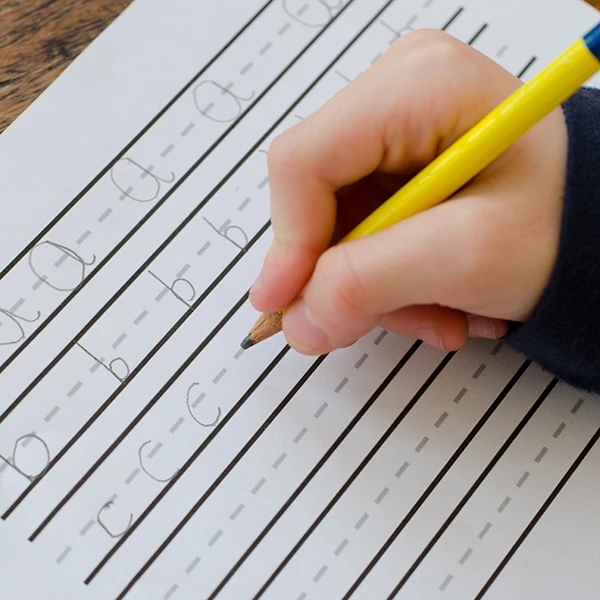
Reading progresses from having learned letter sounds to sounding out full words, and more advanced students even begin reading simple sentences. Children have more time to get comfortable with holding and using writing instruments, and in turn to get comfortable with handwriting. In their preschool class, they may have learned about scientific reactions. In Junior Kindergarten, they might make a model volcano. Physical development focuses on large muscle groups with fun activities like running, jumping and hopping.

Independence and School Readiness
Our Junior Kindergarten teachers also work with students on being capable of doing more things for themselves. At this age, children experience more complex emotions and interactions that they may not yet understand. Our teachers work with them to develop vocabulary so they can resolve more issues themselves. Where children have had help using scissors, glue, and other tools in the classroom, they transition to these activities being self-directed. They clean up after themselves. Some children this age may still have help when using the bathroom at home, but that help is not likely to be available in kindergarten. Our teachers help empower children to use the bathroom independently with clean and healthy practices.
The Junior Kindergarten Classroom Environment
In Junior Kindergarten, the learning environment becomes more like a classroom. Children progress from the small groups at tables or on the carpet to spending some time in a larger group at desks. The teacher may use handouts and worksheets as she addresses the class, with the students all following along together. Children who may need additional help will still get individualized attention. Similarly, children who finish class activities ahead of others still have the freedom to move on to a self-directed activity. There is a creative writing center where children can use crayons, construction paper, stamps, and stickers to create their own projects. There is also a “quiet center” where children can have a little time to themselves, often with a book.